Electronic Assistant for Impaired People
For people with serious visual impairments, a system is proposed that helps to identify obstacles and call for help in an emergency situation. The system is based on a…
A trolleybus is the most economically advantageous transport because it is cheaper to operate than a bus, and it has no CO2 emissions, which makes it an eco-friendly vehicle. However, it does have one major drawback, such as the limited mobility that is caused by the connection to the power grid and the line along which it is laid. Therefore, in this case, it is advisable to use a traction system to which a high-voltage battery is connected. The capacity of such a battery is not large compared to the electric bus, so the cost of such a vehicle is low. The structure and modeling of the traction system with a high-voltage battery is developed. The main difference between this scheme and the usual trolleybus is that it can move part of the route autonomously. The energy to power the actuator is taken from a constant voltage source. In this case, the rectifier is required to prevent the emergency mode from occurring when the polarity of the connection can be confused. After the rectifier goes the DC link is a capacitor. The link is connected to a 3-phase inverter, which generates a 3-phase voltage on the motor. The main disadvantages of this scheme is that during start-up power, which is drawn from the network much more than in the steady state. Also, when braking occurs, the energy cannot be transmitted back to the network, because the rectifier does not allow the energy to go back. In this case, an active rectifier consisting of transistors can be used instead of a rectifier. This allows the energy to be recovered back into the grid. For the most part, trolleybus networks are not designed for energy recovery and, as a rule, such circuits install a brake resistor that connects to the DC link during braking. increase in current, but in this case all the useful energy that could be used is dissipated on the resistor. In this case, it is advisable to use an additional converter, which itself will consume this energy and then it can be used when starting the engine. Such a converter is required to charge the battery with the energy released during braking. And after the energy has been accumulated, it is reused to reduce grid load during engine start-up. The control of the actuator and the converter is consistent. When the actuator is braking, it causes an increase in the voltage in the DC link and this excess energy, which caused this increase, must go into the accumulator for energy storage.
This work is openly licensed — share and adapt freely with attribution to the authors and the journal. View license terms ↗
Copyright (c) 2020 Ігор Андрійович Мартюхін (Автор)
For people with serious visual impairments, a system is proposed that helps to identify obstacles and call for help in an emergency situation. The system is based on a…
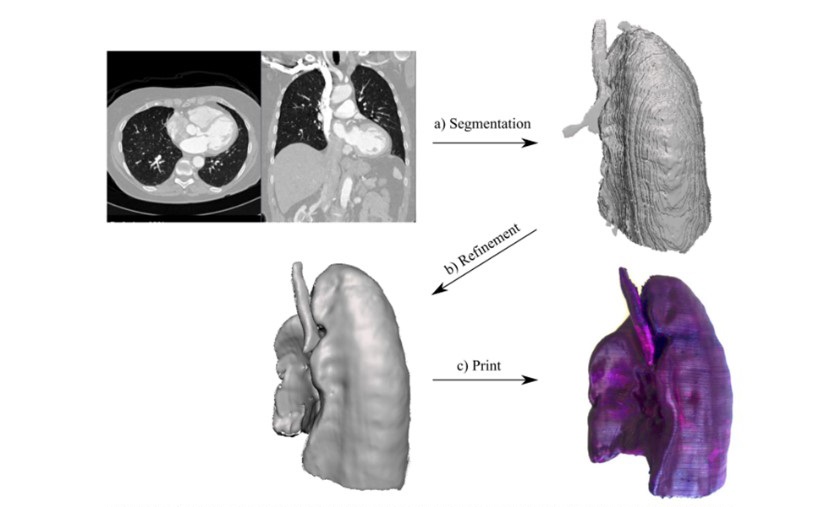
3D-modeling in the medical field can be used to create medical models (eg, tissues and human organs) using 3D-printing or used for digital 3D visualization of the…
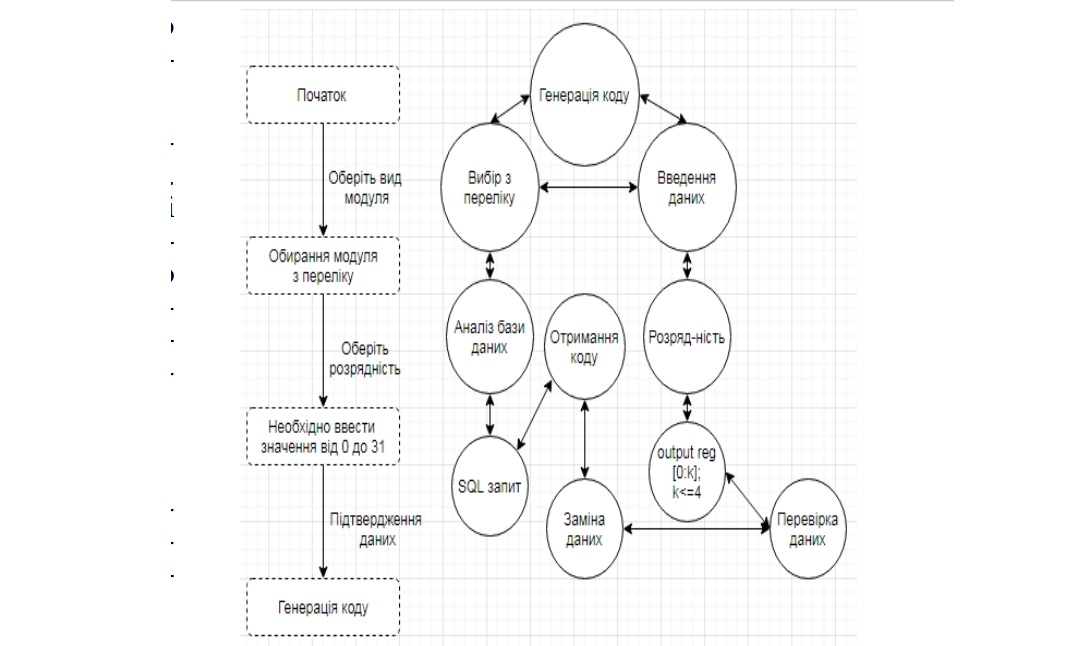
Today, programming is one of the most actively developing technological areas in the world. Moreover, every year the degree of such development only increases, which is…
You may also start an advanced similarity search for this article.